PrisonPandemic archive includes 4,700 stories, new thematic collections, artwork, curriculum materials and other resources
When COVID-19 shut prison doors to the outside world in March 2020, a team of UC-led researchers refused to let the voices inside go silent.
As facilities closed to visitors, journalists and researchers, the team launched PrisonPandemic, a living digital archive of firsthand accounts from people incarcerated in California prisons and jails, their family members and the staff who worked alongside them.
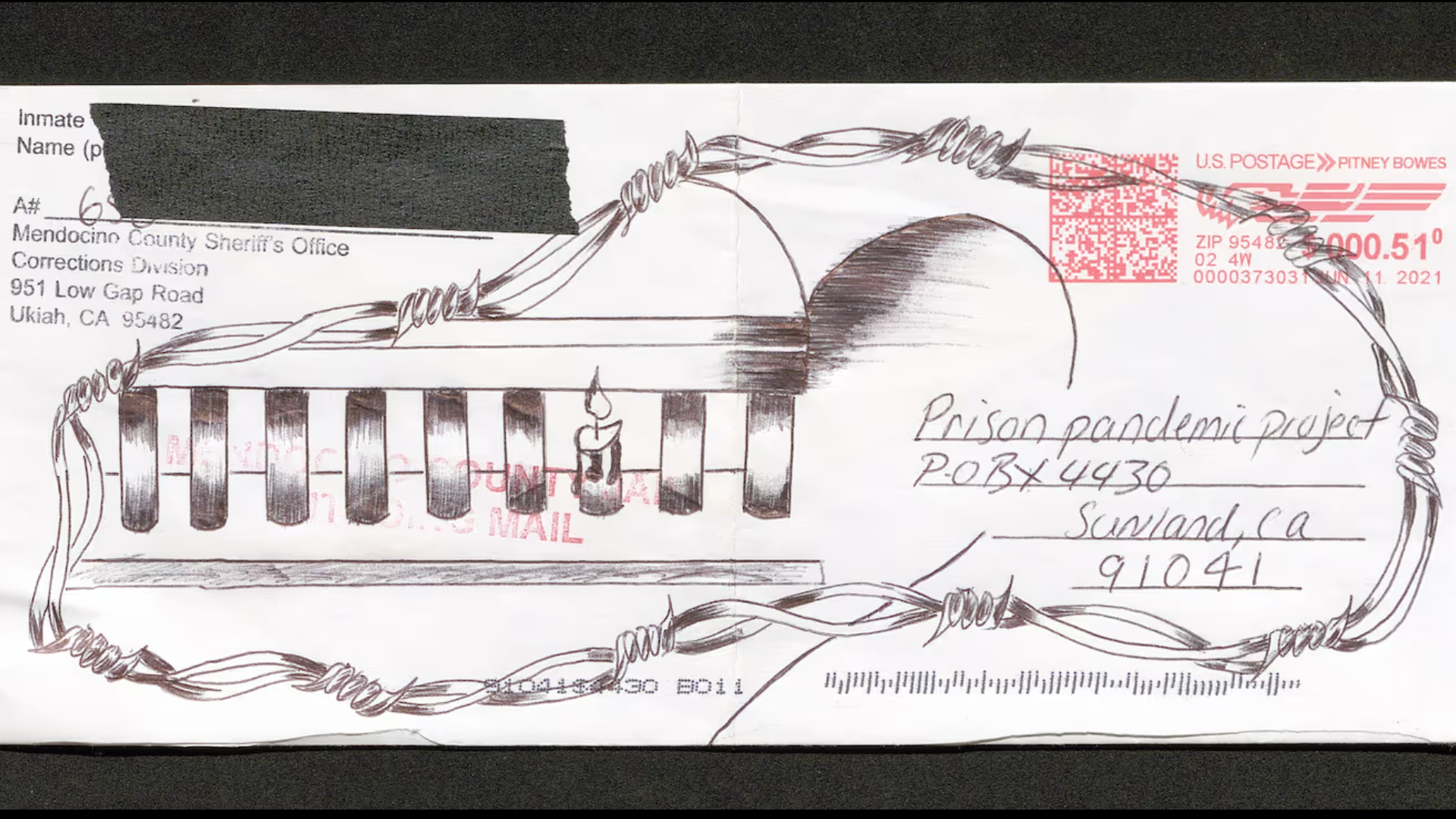
Now, six years later, that effort has grown into a newly expanded website, featuring approximately 4,700 stories gathered through phone calls and hand-written letters, new thematic collections, contributed artwork, teaching materials, project publications and other resources.
 “Hearing the phone calls and reading the letters brings the direct unfiltered experiences of incarcerated people into research and into the classroom,” says Keramet Reiter, UC Irvine criminology, law and society professor and project co-founder. “Our hope is that researchers and educators will draw from this archive to give voice to an often hidden and inaccessible group of incarcerated people and their family members.”
The archive is a collaborative, grant- and donor-funded effort led by Reiter, Kristin Turney, UCI sociology Dean’s Professor, and Naomi Sugie, formerly a UCI criminology, law and society associate professor, now an associate professor of sociology at UCLA. UCI Special Collections and Archives at the libraries, and digital archivist Elvia Arroyo-Ramírez, has been a core project partner and will host a permanent archive of the PrisonPandemic contributions in the newly-launched Prisons & Society Collection on campus. Additional team members over the past six years have included Elena Mo, creative producer and designer, a host of UCI grad students – including co-founders Joanne DeCaro and Gabe Rosales, as well as Alexis Rowland – and School of Social Ecology field study students as well as student volunteers.
In the early days of the pandemic, people incarcerated in prisons and jails faced the same terrifying unknowns as the rest of the world: a quickly-evolving disease, scarce protective equipment and a social order turned upside down. For those in prisons and jails, the stakes were even higher. Politics, the researchers explain, often trumped public health: medically vulnerable people were kept incarcerated despite mounting risk; solitary confinement was used in lieu of medical isolation in violation of international standards; and communication with close family members and loved ones outside of carceral facilities was challenging and, during lockdowns, impossible.
In the new PrisonPandemic website’s resources page, “Learning & Teaching Resources,” the team provides 10 teaching modules connecting the archive’s stories to enduring prison-based problems, from mass incarceration, health, and aging to race, gender, family inequality, and other topics. They also include teaching modules on the use of archival methods and assignment templates for working with the archive as data.
 “In our own classrooms, we often incorporate the archive into our courses on mass incarceration, the criminal legal system, theories of punishment, and healthcare inequities,” Turney says. “Students value the opportunity to interact with the archive by searching the thematic collections, listening to the phone calls, and connecting their own experiences with the pandemic to these accounts. We hope that educators will consider incorporating some of these modules into their curriculum, as they give students the opportunity to actively engage with stories from people in prisons and jails.”
The PrisonPandemic website includes the largest archive of stories contributed by incarcerated people during the COVID-19 pandemic, covering all 35 California state prisons, many county jails, and other carceral facilities in California, including federal prisons and ICE detention centers. It includes stories from select out-of-state facilities as well.
Dozens of accounts were contributed in Spanish, and new thematic collections specifically highlight the experiences of Spanish-speaking people incarcerated in California. In addition, artwork submitted to the archive is now featured on the site, offering yet another window into lives too often kept out of view.
Improved search functionality on the website makes the archive more navigable, allowing users to filter stories by theme, jurisdiction, date, and more.
Beyond the stories themselves, the site serves as a research hub, bringing together PrisonPandemic documents and publications, providing roadmaps for others to learn from.
“In the current environment, carceral facilities–and the people incarcerated within them–are rarely accessible, leaving a critical gap in knowledge and expertise that permeates throughout research and teaching,” says Sugie. “We encourage researchers and educators to consider the small and large ways that they might incorporate the archive into their work.”
PrisonPandemic has received funding from: Arnold Ventures; the National Center for Research Resources and the National Center for Advancing Translational Sciences, National Institutes of Health, through Grant UL1 TR0001414; the Council on Library and Information Resources’ Digitizing Hidden Special Collections and Archives program; a Sustaining Public Engagement Grant from the American Council for Learned Societies made possible by a grant from the National Endowment for the Humanities as part of the Sustaining the Humanities through the American Rescue Plan initiative; NEH’s Division of Preservation and Access; and a Digital Justice Grant from ACLS.
— Heather Ashbach and Mimi Ko Cruz